
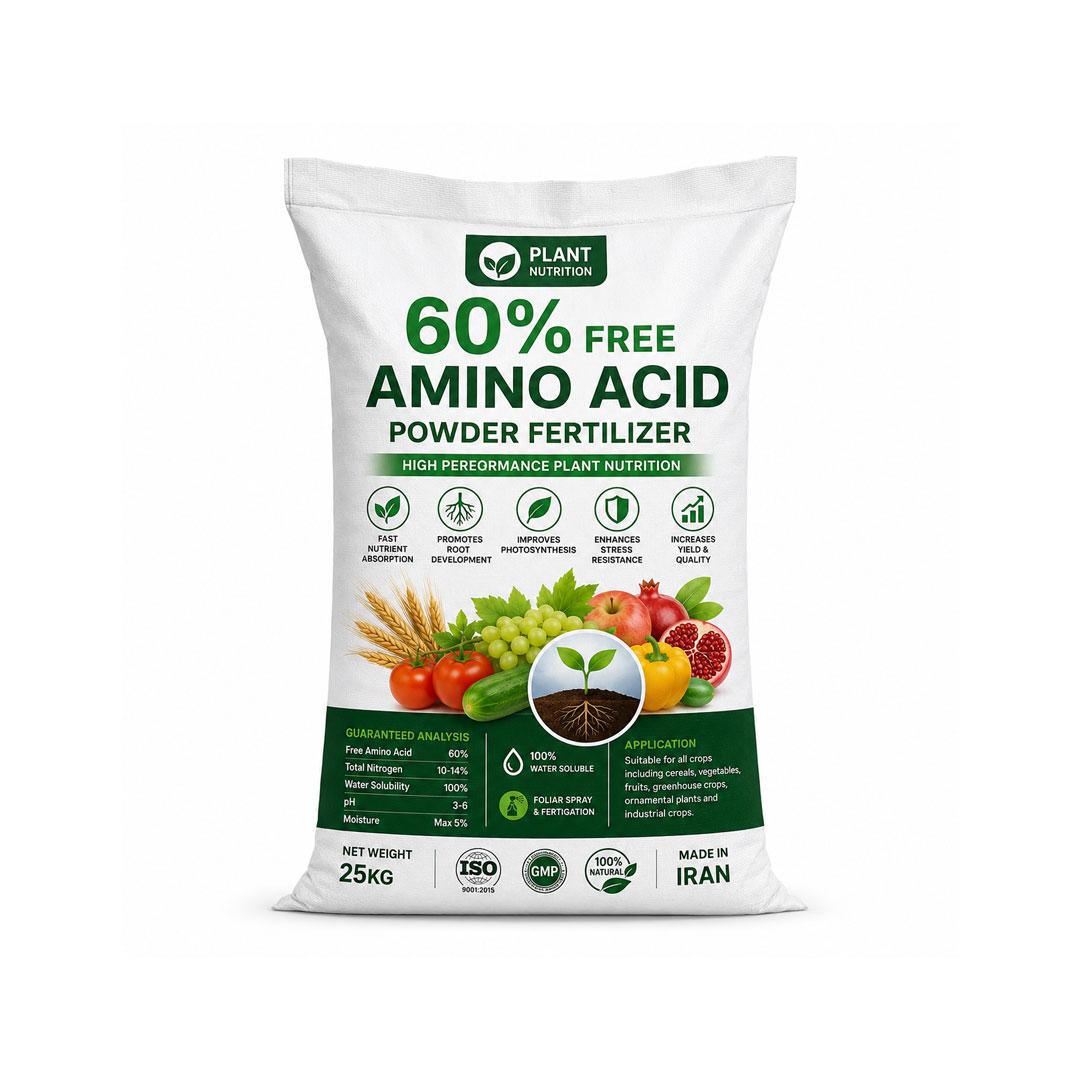
60% Free Amino Acid Powder Fertilizer from Iran, a powerful agricultural biostimulant designed to improve plant growth,...
صادرات کن
Modern agriculture increasingly relies on innovative plant nutrition technologies to improve crop productivity and sustainability. Among the most valuable agricultural biostimulants are amino acids, which play an essential role in plant metabolism, nutrient absorption, and resistance to environmental stress.
Although plants naturally produce amino acids, unfavorable conditions such as drought, salinity, frost, heat stress, and nutrient deficiencies can significantly reduce their synthesis. Applying amino acid fertilizers helps plants conserve energy while improving growth, nutrient utilization, and crop quality.
Amino acids are organic compounds that serve as the building blocks of proteins. In plants, proteins are involved in nearly every biological process, including enzyme production, hormone synthesis, chlorophyll formation, photosynthesis, and cellular development.
Healthy plant growth depends on an adequate supply of amino acids. When plants experience environmental stress, external amino acid applications can help maintain metabolic activity and support faster recovery.
One of the primary reasons growers apply amino acid fertilizers is their ability to increase the efficiency of nutrient absorption and fertilizer utilization.
1. Chelating Essential Micronutrients
Amino acids naturally chelate micronutrients such as iron (Fe), zinc (Zn), manganese (Mn), copper (Cu), and calcium (Ca). Chelation keeps these nutrients soluble and available for plant uptake, reducing nutrient fixation in the soil.
As a result, plants absorb micronutrients more efficiently through both root systems and foliar applications.
2. Stimulating Root Development
Amino acids encourage the formation of lateral roots and root hairs, increasing the overall surface area available for water and nutrient absorption.
A stronger root system improves nutrient acquisition while enhancing plant stability during periods of drought or other environmental stresses.
3. Supporting Enzyme Activity
Many enzymes involved in nutrient transport and metabolism require amino acids for proper synthesis and function.
Improved enzyme activity enhances the absorption and utilization of nitrogen, phosphorus, potassium, and other essential nutrients throughout the plant.
4. Increasing Chlorophyll Production
Certain amino acids, including glycine and glutamic acid, participate directly in chlorophyll biosynthesis.
Higher chlorophyll levels contribute to:
5. Enhancing Stress Resistance
Environmental stresses such as drought, salinity, frost, hail, heat, and transplant shock often reduce nutrient uptake.
Applying amino acid fertilizers before or after stress events helps plants maintain metabolic activity and recover more rapidly.
For optimal results, amino acid fertilizers should be applied during critical growth stages, including:
No.
Amino acids are classified as plant biostimulants, not complete fertilizers. Their primary role is to improve nutrient uptake and increase fertilizer efficiency rather than replace essential macronutrients such as nitrogen, phosphorus, and potassium.
When integrated into a balanced crop nutrition program, amino acids significantly improve nutrient use efficiency and overall plant performance.
Beyond improving nutrient uptake and yield, amino acids contribute to higher-quality agricultural products by:
When selecting an amino acid fertilizer, growers should evaluate:
Amino acids have become an indispensable component of modern crop nutrition. Their ability to improve nutrient uptake, stimulate root growth, enhance stress tolerance, and increase crop quality makes them one of the most valuable agricultural biostimulants available today.
For growers, distributors, and agricultural businesses seeking advanced plant nutrition products, exploring premium amino acid fertilizers through Abrishamroad B2B provides access to trusted suppliers and innovative agricultural solutions that support sustainable farming and higher productivity.
Yes. They are suitable for field crops, orchards, vegetables, greenhouse production, ornamental plants, and many other agricultural systems.
No. Amino acids complement conventional fertilizers by improving nutrient uptake and utilization.
Applications are most effective during active growth stages and before or after environmental stress events.
Yes. When incorporated into a balanced nutrition program, amino acids improve plant health, nutrient efficiency, and overall crop productivity.
60% Free Amino Acid Powder Fertilizer from Iran, a powerful agricultural biostimulant designed to improve plant growth,...
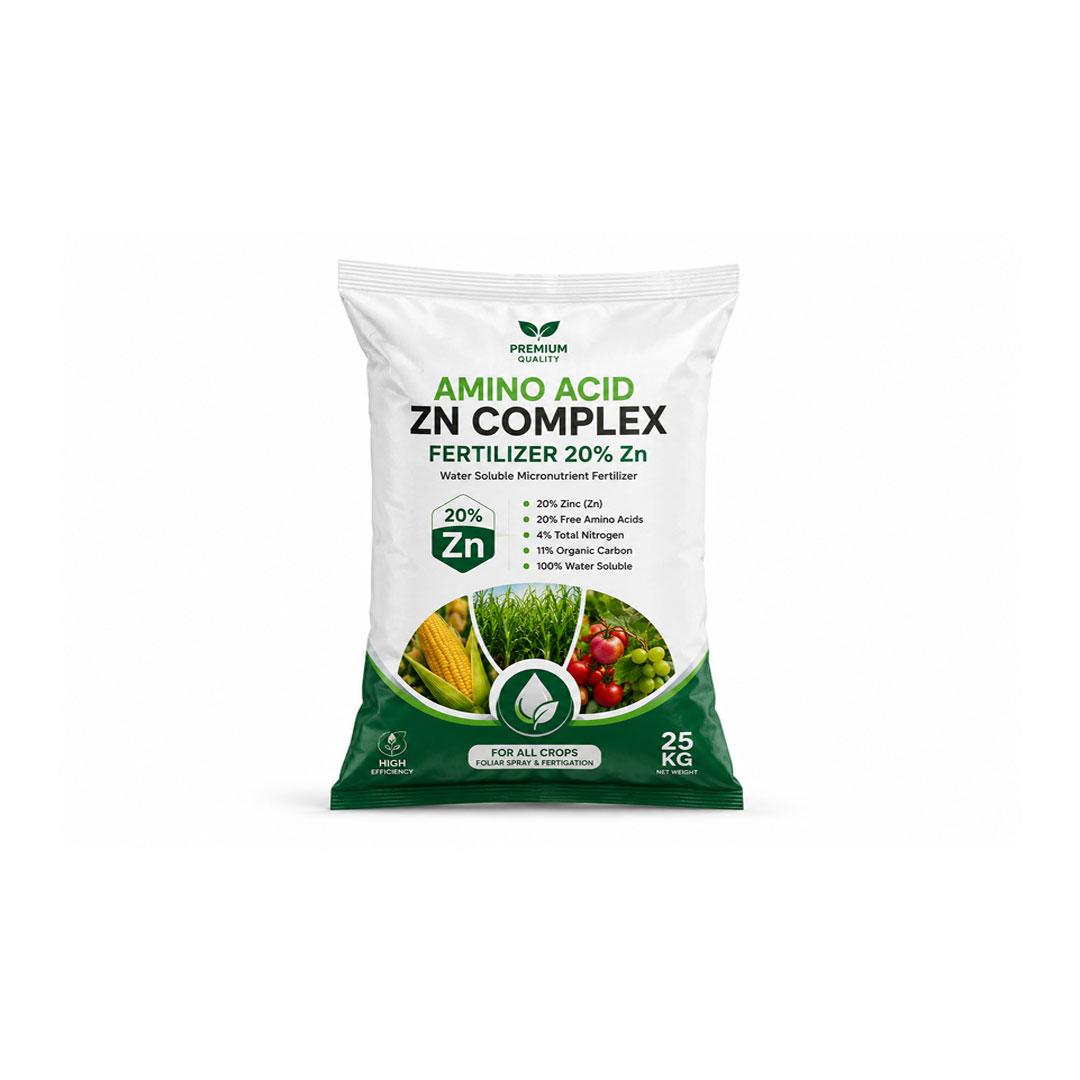
Amino Acid Zn Complex Fertilizer 20% Zn, a premium water-soluble chelated zinc fertilizer that enhances plant growth, yi...
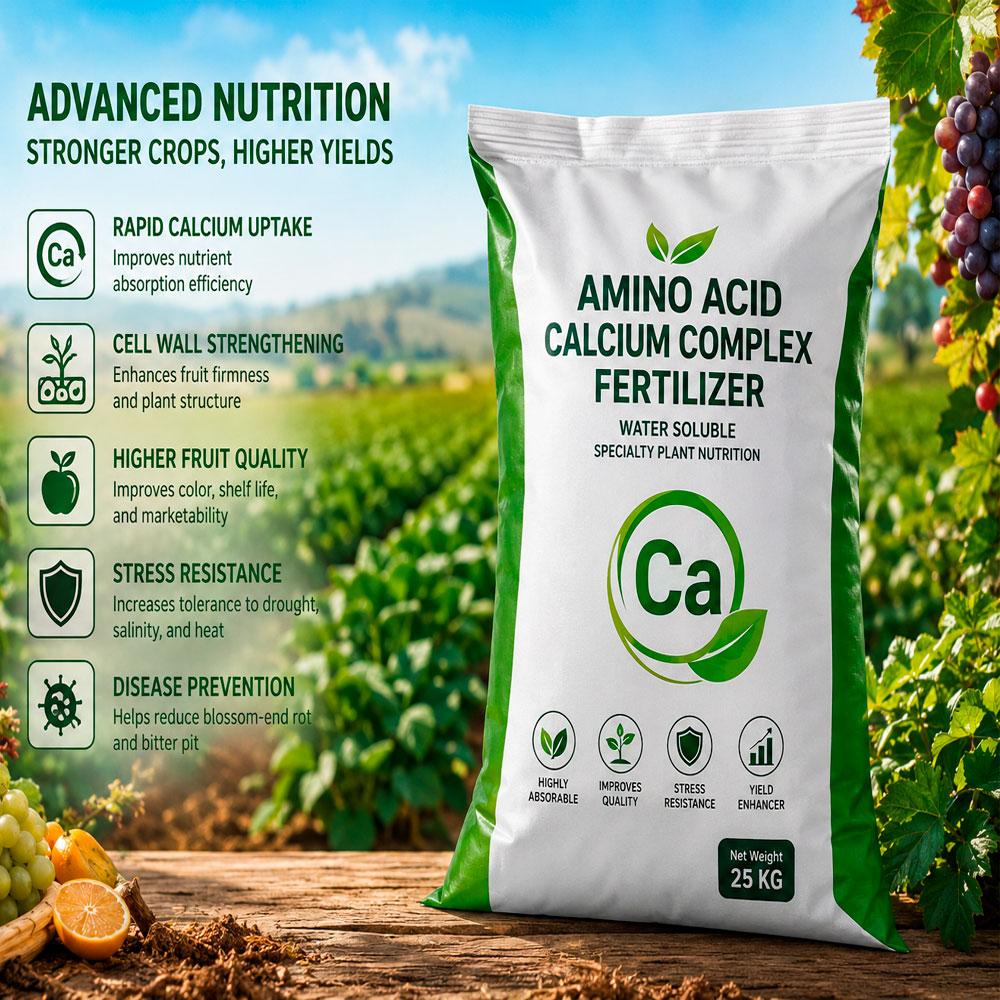
Amino Acid Calcium Complex Fertilizer enhances crop quality, nutrient absorption, and stress resistance while creating n...
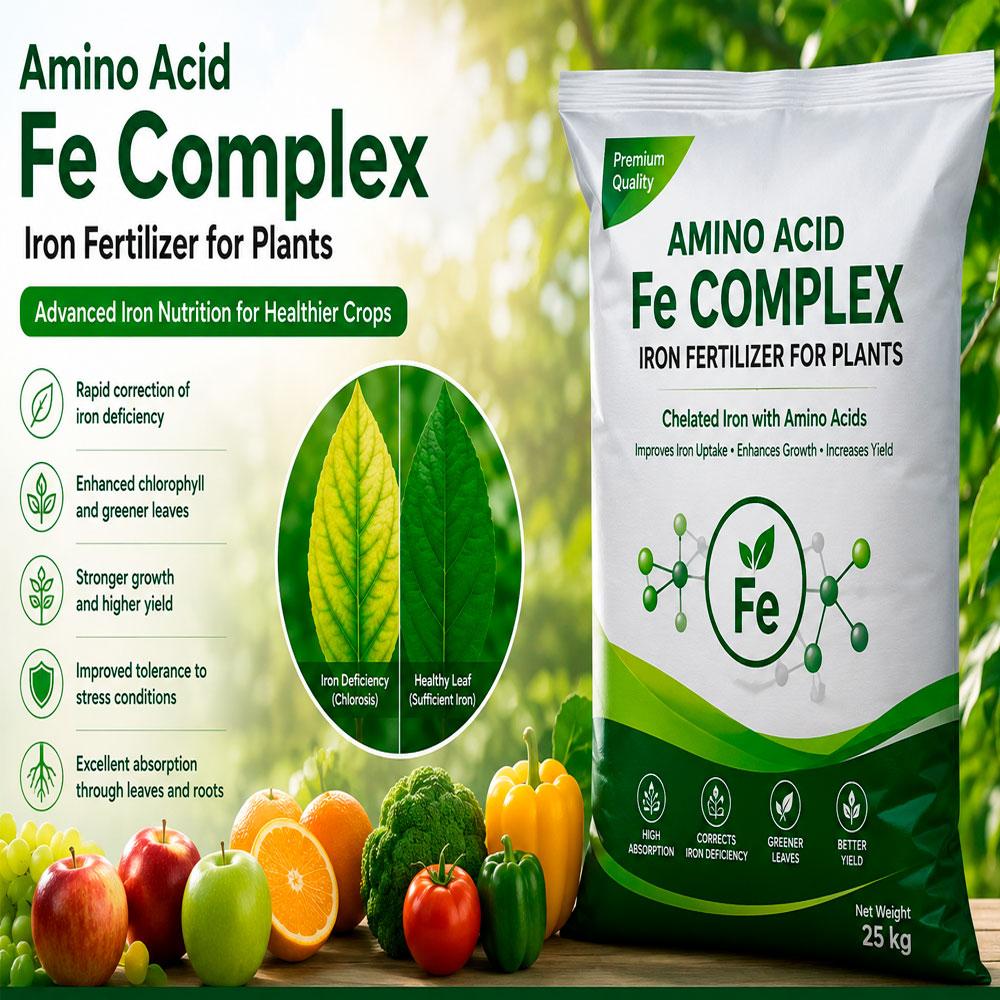
Amino Acid Fe Complex Iron Fertilizer improves iron absorption, corrects chlorosis, boosts chlorophyll production, and e...